UK Government MUST now identify low-rise residencies with dangerous cladding in wake of Grenfell tragedy
Promoted
By MAILONLINE REPORTER
PUBLISHED: 14:07, 8 September 2023 | UPDATED: 20:56, 8 September 2023
The Government is being urged to identify the number of low-rise residences with dangerous cladding as pressure mounts on ministers to scrap an 'arbitrary' height limit for funding.
Campaigners said last night that an 'unknown quantity' of blocks below 11 metres are still excluded from grant funding to make buildings safer.
It comes amid evidence of combustible cladding fitted to low-rise blocks in the wake of the Grenfell tower fire in June 2017.
They include Garden Royal, a cluster of three 10m-high residential blocks in Putney built in the 1960s, where composite panels were installed without planning permission three months after the tragedy, which killed 72 people.
Some residents claim that the presence of potentially dangerous cladding has pushed up insurance premiums six-fold.
The issues facing residents in low-rise buildings has come to the fore after Hilary Benn, the Labour MP for Leeds Central, tabled an early day motion in the House of Commons earlier this month.
It warns that residents in blocks under 11 metres face uncapped costs to fix cladding and other building safety defects and highlights the absence of financial support.
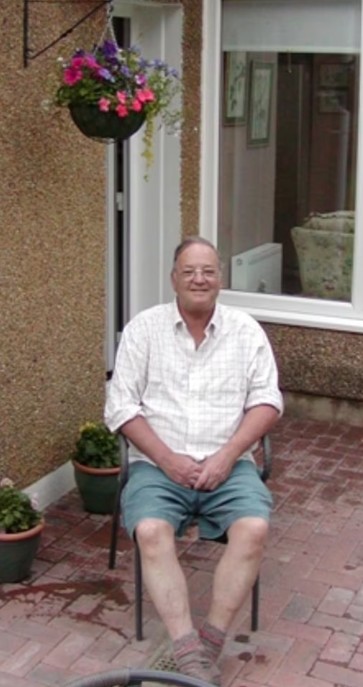 In 2021, Richard Townsend-Rose (pictured), a retired engineer whose friend owns one of the 50 flats at Garden Royal, discovered that flammable cladding was present about a third of the blocks.
Benn's motion, so far supported by 20 MPs, calls for a building safety fund to be established to approve and control essential safety work where developers have not taken on the responsibility of doing so.
The Grenfell tragedy led to a ban on combustible materials on the external walls of buildings above 18m yet more than 10,000 mid and high-rise buildings across the country need 'life-critical' safety work.
The campaign group, End Our Cladding Scandal (EOCS) said the figure does not include an 'unknown quantity' of low-rise buildings as these are excluded from Jennifer Frame, from EOCS, said: 'Leaseholders in buildings under 11 metres are as blameless as those in taller buildings and should not have to pay the price for a national failure of building safety standards and regulation...
'We remain concerned that as well as excluding buildings under 11 metres from grant funding to remove cladding - regardless of how high the level of risk is - the government is still not holding developers to account for remediation or mitigation costs in buildings below this arbitrary height.'
In 2021, Richard Townsend-Rose, a retired engineer whose friend owns one of the 50 flats at Garden Royal, discovered that flammable cladding was present about a third of the blocks.
An inspection by the London Fire Brigade pointed out that some remedial action was needed to comply with Regulatory Reform (Fire Safety) Order 2005 and in a separate recommendation, stated: 'The commissioner would strongly urge that you consider the presence of combustible facade cladding materials as part of the risk assessment process for these premises'.
An independent inspection by fire safety engineers in November 2021 failed to identify the manufacturer of the panels but noted that they contained an expanded polystyrene core that is combustible and can 'assist...[and] support the spread of fire'.
Their report deemed the fire risk to be 'acceptably low' after the height of the buildings, the extent of cladding and existing fire safety measures were taken into consideration.
Richard said: 'Several residents, including Townsend-Rose, disagree and point to the proximity of cladding to fire escapes. However, they face a £40,000 bill to replace the cladding.
'The act of replacing non-flammable tiles with highly flammable cladding to the fire escape routes is a negligent act of incompetence which simply does not pass the common sense test...
'As a Chartered Engineer, it is not surprising that I am working to reverse this calamity, in accordance with my institution's mission statement.'
A spokesman for Wandsworth council said the installation of cladding at Garden Royal 'was done so without planning enforcement consent but this is now outside the window for enforcement action'.
The council has since given a retrospective planning permission from an aesthetic point and an external contractor has approved the installation.
Ministers have said that any building under 11m that faces extensive remediation work will now be considered on a case-by-case basis but those hoping to secure funding should expect delays.
A recent survey by EOCS showed that only 21.4 per cent of leaseholders in dangerous blocks have seen remediation work start. For 44.4 per cent, a date has not been identified for work to begin. It means thousands of people are trapped in homes they cannot sell or remortgage.